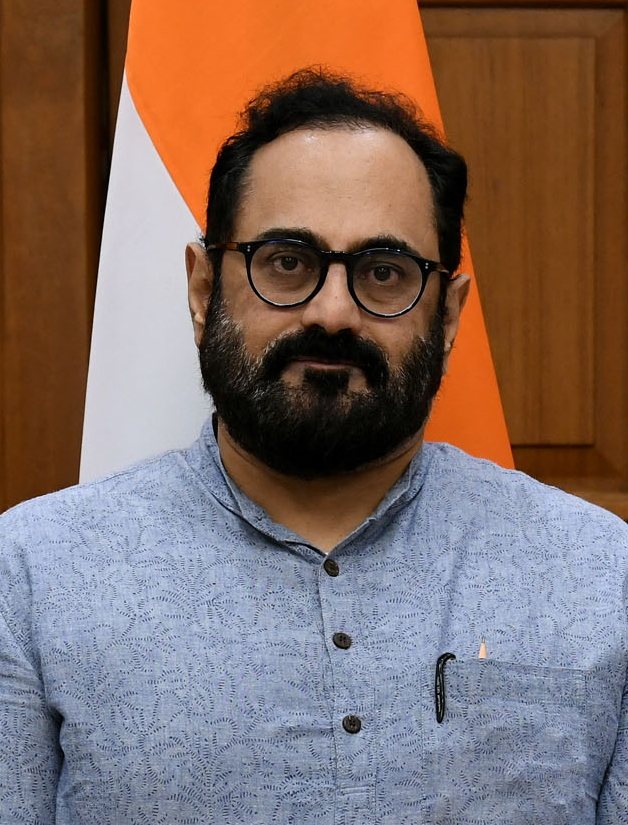
Union minister Rajeev Chandrasekhar has mocked China's alleged approach to acquiring technology, after claims surfaced linking Nvidia chief executive Jensen Huang to a suspected Chinese espionage effort. Chandrasekhar questioned why nations would invest in research and development when, in his telling, an easier route was being pursued through what he described as unethical means.
The allegations centre on so-called honeytrap claims, in which a target is allegedly compromised through personal entrapment in order to extract information. The reports tie Huang to such efforts, and Chandrasekhar's remarks were directed at the ethics of China's approach to acquiring technology. He used the episode to argue that genuine innovation requires sustained investment in research rather than shortcuts.
China has denied the allegations and has described them as baseless. Huang has acknowledged that he faced personal issues but has denied that any breach of national security took place. Nvidia's board has responded by launching an independent investigation into the matter.
The outcome and findings of that investigation have not yet been reported, and the veracity of the honeytrap claims remains unverified. The scope of any security breach is also unclear on the available information. Until the board's review concludes and evidence is made public, the central allegations stand as claims rather than established facts.
The episode comes at a time when advanced semiconductors and artificial intelligence hardware have become focal points in the competition between major powers, and when companies in the sector face close scrutiny over the security of their leadership and their dealings abroad. For India, which is seeking to build its own semiconductor and electronics capacity, the debate has drawn attention to the role of domestic research spending and the integrity of technology partnerships.
Source: timesofindia.indiatimes.com
7